

Damp Walls and Peeling Paint: Is Mould Growing Behind Your Walls?
Have you noticed paint bubbling, cracking or peeling on your walls? Perhaps there are dark patches, a persistent musty smell or areas that never seem to dry completely.
These signs may appear to be ordinary paint problems, but they can sometimes indicate something more serious: excess moisture within your walls.
Dampness is one of the leading conditions that encourage mould growth in homes. While peeling paint is not always caused by mould, it can be an important warning sign that moisture is present and needs attention.
1. Why Does Paint Start Peeling on Walls?
Paint is designed to protect and improve the appearance of your walls. However, when moisture finds its way into the wall, it can interfere with the bond between the paint and the underlying surface.
As moisture accumulates, you may begin to notice:
-
- Paint bubbling or blistering.
-
- Peeling or flaking paint.
-
- Discoloured patches on walls.
-
- White powdery deposits (efflorescence).
-
- Damp or soft plaster.
-
- Persistent musty smells.
These problems can occur due to leaking plumbing, roof leaks, poor drainage, rising damp, water seepage through external walls or condensation.
Simply repainting the affected area without addressing the moisture source may only provide a temporary improvement.
2. What Is the Relationship Between Damp Walls and Mould?
Mould needs moisture, a suitable surface and organic material to grow.
Common household materials such as paint coatings, wallpaper, dust and plasterboard coverings can accumulate organic matter that supports mould growth.
When walls remain damp for extended periods, they create favourable conditions for mould spores to settle and develop.
Mould may appear as black, green, grey or white patches. However, it does not always grow visibly on the surface. In some situations, growth can occur behind wallpaper, inside cupboards, beneath loose paint or within other concealed materials.
This is why treating only the visible discolouration may not solve the underlying problem.
3. Can Mould Grow Behind Peeling Paint?
Yes, it can.
When moisture becomes trapped behind paint or within wall materials, it can create conditions that support hidden mould growth.
You may notice:
-
- A musty smell even when there is no visible mould.
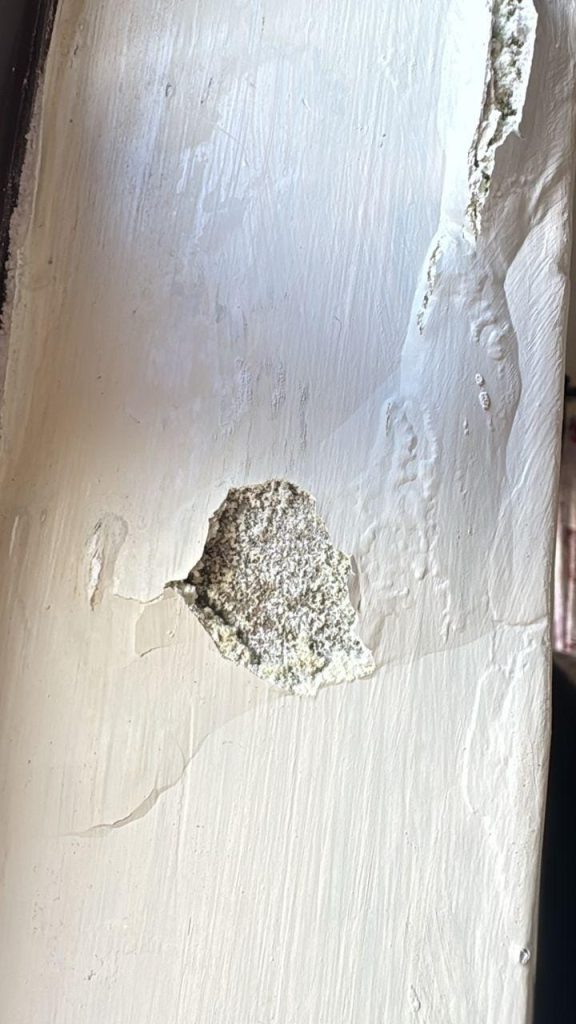 mold risks behind painted walls[/caption]
- A musty smell even when there is no visible mould.
-
- Repeated peeling after repainting.
-
- Dark staining around damp sections.
-
- Mould returning in the same location.
-
- Deteriorating plaster or wall finishes.
However, peeling paint alone does not confirm mould contamination. A proper inspection is necessary to establish whether mould is present and identify the moisture conditions contributing to the problem.
4. Common Causes of Damp Walls in Kenyan Homes
In Nairobi and other parts of Kenya, moisture problems can arise from several sources.
Roof and plumbing leaks: Damaged roofs, leaking water pipes and bathroom plumbing can introduce moisture into walls and ceilings.
Poor external drainage: Water collecting around the foundation or splashing against external walls can contribute to moisture penetration.
Rising damp: Ground moisture can travel upwards through porous building materials, particularly where effective damp-proofing is absent or compromised.
Condensation: Poor ventilation, indoor humidity and everyday activities such as showering and cooking can cause moisture to accumulate on cooler surfaces.
Water seepage: Cracks, poorly sealed windows and defective external wall finishes can allow rainwater to enter a building.
Identifying the actual source is important because different moisture problems require different solutions.
5. Why Repainting Without Treating Dampness Is a Mistake
One of the most common mistakes homeowners make is applying fresh paint over a damp or mould-affected surface.
Although the wall may look better initially, the moisture problem remains.
This can result in:
-
- Paint peeling again within a short period.
-
- Recurring mould growth.
-
- Continued deterioration of plaster and wall finishes.
-
- Persistent musty odours.
-
- Additional maintenance and repainting costs.
The correct approach is to identify and address the moisture source, assess any mould contamination, carry out appropriate remediation and allow the affected materials to dry before applying suitable protective finishes.
6. When Should You Arrange a Professional Mould and Moisture Assessment?
Consider a professional assessment if:
-
- Paint keeps peeling despite repeated repainting.
-
- You notice mould returning in the same areas.
-
- Walls feel damp or show unexplained staining.
-
- There is a persistent musty smell indoors.
-
- You suspect a hidden plumbing or moisture problem.
-
- You are preparing a property for occupation or renovation.
At Miram Solutions, we conduct visual mould assessments and moisture checks to help identify affected areas and possible moisture concerns.
Where necessary, we recommend appropriate mould remediation and treatment measures. We also provide guidance on moisture-related issues that may require attention from plumbers, waterproofing specialists or building contractors.
Our approach focuses on addressing the contamination while recognising that long-term results depend on controlling the underlying moisture source.
7. Do Not Ignore the Warning Signs
Peeling paint may look like a minor cosmetic issue, but recurring paint damage can indicate a deeper moisture problem.
Early investigation can help prevent further deterioration, unnecessary repainting expenses and persistent indoor mould concerns.
Is your wall peeling, bubbling or showing signs of dampness?
Miram Solutions provides professional mould assessment, moisture checks and mould remediation services in Nairobi.
Contact us to arrange an assessment and understand what may be happening behind your walls.
Miram Solutions Limited
Mould Assessment | Moisture Checks | Mould Remediation
Website: https://www.miramsolutions.co.ke Phone/WhatsApp:0740747627
Email: info@miramsolutions.co.ke